
Velcro Disc
PAOLA ABRASIVE GROUP
PAOLA Velcro Disc

Velcro Disc
PAOLA Velcro Disc
Also sold as a hook & loop disc or sanding paper disc, this product is used across a very wide range of industries. The hook-and-loop backing lets the operator change discs in seconds, which is why it has replaced hand sanding and the older adhesive-backed (PSA) disc across most industries.
The older stick-back disc had to be glued to the pad and peeled off after use. The Velcro Disc simply pulls away and the next one presses on. On a production line, that time saving is substantial.
How It Mounts
The disc attaches to the angle grinder or sander through a sanding pad. The pad has a threaded insert on the back that screws onto the machine spindle, and a hook-and-loop face on the front that grips the disc. The pad stays on the machine; only the disc is changed.
Hole Patterns
Discs are classified by the number of dust-extraction holes. The holes let the machine draw sanding dust off the surface and into the collection bag, which keeps the work clean and produces a better surface finish. The hole pattern must match the backing pad.
1. No holes
The most widely used type. Fitted to standard pads on machines without dust extraction, normally in 115 mm and 180 mm.

2. 6 holes
Mounted on 6-hole pads. Dust is drawn through the six holes into the collection bag, keeping the workpiece clean throughout the operation. A clean surface produces a better finish.

3. 7 holes
Normally fitted to pneumatic (air) sanders. One central hole plus six around it; the centre hole is usually the larger of the two sizes. Sanding dust is carried into the extraction bag as it is produced.

4. 8 holes
Eight holes with no centre hole, or in some patterns seven around plus one centre. Typically used on air sanders with dust extraction. The hole count does not affect abrasive quality — it only has to match the pad and machine.

5. 15 holes
Designed for higher extraction volume, clearing sanding dust from the surface more effectively and improving the finish.

6. 75 holes
A specialist pattern for applications requiring maximum extraction. Low volume, and the matching pads are rarely stocked.

7. 104 holes
The lowest-volume pattern in the range, unused in many markets but available to order.

Backing Materials
The backing determines how the disc behaves on the workpiece. Each type is engineered for a particular kind of work, and matching them properly is where productivity comes from.
Using one backing for every job is possible, but it is not professional. Every backing is designed for a specific task, and selecting the right one for the workpiece is what separates consistent output from guesswork.

1. Paper Backing
Abrasive grain bonded to a specialist paper with resin and cured. This is the highest-volume type in the range.

Paper backing is favoured for its combination of price and ease of use, which is why most buyers specify it.
2. Foam Backing
Grain bonded onto a flexible foam base. The foam conforms to contours, making it the right choice for curved and shaped surfaces.
3. Film Backing
Grain bonded to a layered plastic film. Film gives a very uniform, tear-resistant backing and is specified in automotive refinishing and power generation work.
Abrasive Grains
Grain selection follows the material being worked. Components differ in composition and hardness, and the grain has to suit the material.
1. Aluminium Oxide (Red)
The general-purpose grain, supplied in red. Used on wood, iron and general metals, and the most economical grade in the range. This is the correct choice for the majority of everyday sanding work.

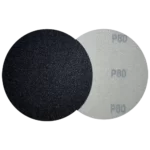
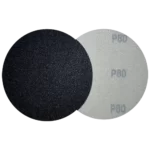
2. Silicon Carbide (Black)
Built on silicon carbide grain and supplied in black. Buyers often judge this grade by colour alone, but grain purity varies enormously between suppliers and that is what drives the price difference.
The primary application is stone — granite, marble and travertine — and it can also be used on cast iron, alloyed components and glass. Water may be used to cool the surface during work.

3. Zirconia Alumina
Zirconium is a hard, high-value element. Adding it to the abrasive substantially increases grain toughness and extends disc life.
Zirconia discs are specified for stainless steel, super alloys and engineered stone — materials that are hard, wear-resistant and unforgiving of a weaker grain.

4. Ceramic Grain
The most aggressive and most expensive grain available, more costly than zirconia. It holds its cut on the hardest materials and is specified in demanding, specialised industries.
Diameters
Supplied worldwide in 35 mm, 77 mm, 115 mm, 125 mm, 150 mm and 180 mm to suit the full range of applications.
1. 35 mm
For confined areas where a full-size disc cannot reach. Every industry has surfaces that need a small tool, and this is it.
2. 77 mm
Also for restricted access. Like the 35 mm, it covers less area per pass, but it reaches what larger discs cannot.
3. 115 mm velcro disc
The highest-demand size across all industries and the most widely stocked. Fits mini angle grinders and balances coverage against manoeuvrability.
4. 125 mm
Normally fitted to pneumatic sanders, most of which are equipped for dust extraction. Specified where surface quality matters and airborne dust has to be controlled.
5. 150 mm
Like the 125 mm, primarily an air-sander size with dust extraction. Dust is pulled into the collection bag rather than left on the workpiece.
6. 180 mm velcro disc
The second highest-volume size after 115 mm. It covers a wide area quickly, and matching pads are readily available in every market.
Quality Grades
PAOLA products are supplied in two grades: Excellent and Economy. The black silicon carbide disc for stone is produced to Excellent grade using German raw materials. The red aluminium oxide disc is supplied to Economy grade.
The PAOLA Economy grade is built well above the level of comparable competitor products — sufficient for the overwhelming majority of applications.
Specification
PAOLA Silicon Carbide (black), Excellent grade — #40 · #60 · #80 · #100 · #120 · #150 · #180 · #220 · #280 · #320 · #400 · #600
PAOLA Aluminium Oxide (red), Economy grade — #40 · #60 · #80 · #100 · #120 · #150 · #180 · #220 · #280 · #320 · #400 · #600
Applications
Used in woodworking, automotive manufacturing and refinishing, power generation, refineries, stone processing and metal fabrication.
Why PAOLA
Safety, consistency, service life and a defensible price. A quality abrasive protects the operator as well as the workpiece, and operator safety is the first requirement in any abrasive specification.
Bulk and Distributor Enquiries
Review the PAOLA catalogue table above, then send your requirement using the order form at the bottom of this page. Please complete your contact details accurately so our team can respond promptly.
PAOLA Velcro Disc Catalogue
پشت کرکی پائولا |
قطر |
متریال |
رنگ سنباده |
دانه بندی |
موارد مصرف |
کیفیت |
تعداد در جعبه |
تعداد در کارتن | ||
|---|---|---|---|---|---|---|---|---|---|---|
 |
115mm |
اکسید آلومینیوم |
قرمز |
40# 60# 80# 100# 120# 150# 180# 220# 280# 320# 400# 600# |
چوب ، فلزات عمومی |
اکونومی |
eco |
100 عدد |
2000 عدد | |
 |
115mm |
سیلیکون کارباید |
مشکی |
40# 60# 80# 100# 120# 150# 180# 220# 280# 320# 400# 600# |
سنگ ، شیشه ، چدن |
اکسلنت |
Excellent |
100 عدد |
2000 عدد | |
 |
115mm |
زیرکونیوم |
آبی یا سبز |
40# 60# 80# 100# 120# 150# 180# 220# 280# 320# 400# 600# 800# 1000# 1200# 1500# 2000# |
استنلس استیل ، سوپر آلیاژ ، کورین |
اکسلنت |
Excellent |
100 عدد |
2000 عدد | |
 |
180mm |
اکسید آلومینیوم |
قرمز |
40# 60# 80# 100# 120# 150# 180# 220# 280# 320# 400# 600# |
چوب ، فلزات عمومی |
اکونومی |
eco |
100 عدد |
800 عدد | |
 |
180mm |
سیلیکون کارباید |
آبی |
40# 60# 80# 100# 120# 150# 180# 220# 280# 320# 400# 600# |
سنگ ، شیشه ، چدن |
اکسلنت |
Excellent |
100 عدد |
800 عدد | |
 |
180mm |
زیرکونیوم |
آبی یا سبز |
40# 60# 80# 100# 120# 150# 180# 220# 280# 320# 400# 600# 800# 1000# 1200# 1500# 2000# |
استنلس استیل ، سوپرآلیاژ ، کورین |
اکسلنت |
Excellent |
100 عدد |
800 عدد | |
Economy (eco): standard quality for general-purpose work, at a highly competitive price.
Excellent: built to the highest international standards, with maximum service life, the fastest stock removal, the best surface finish and the highest working speed.
The difference is significant and it comes down to the material you are working. Red is aluminium oxide, for wood, iron, general steel and non-ferrous metals. Black is silicon carbide, for stone, glass, cast iron and alloyed components.
The catalogue table above sets out which grade suits which material. Selecting the wrong grain — or the wrong grit — costs you cutting speed, disc life and surface quality.
Engineered stone is hard and generates a great deal of heat during sanding. That heat degrades ordinary abrasive grain, and the disc loads up and stops cutting. Zirconia grain is far more heat-resistant, resists loading, and holds its cut.
Zirconia costs more than silicon carbide, but it lasts considerably longer and protects the workpiece. On high-value stone, using an underspecified disc can ruin the component — a far more expensive outcome than the price difference on the abrasive.
A heavy-weight German-made paper backing. This is what gives the disc its long service life and high cutting power.
The backing is also fully waterproof, so the operator can wet the surface during work without damaging the disc.
Apply through the form on our contact page. Please enter your full company details and a correct telephone number. Our sales team will contact you promptly.
Yes. This grade uses high-purity silicon carbide grain. Alongside its primary application on stone, it performs well on cast iron, alloyed components and glass. Stone, cast iron and glass are the three materials this grade is built for.


